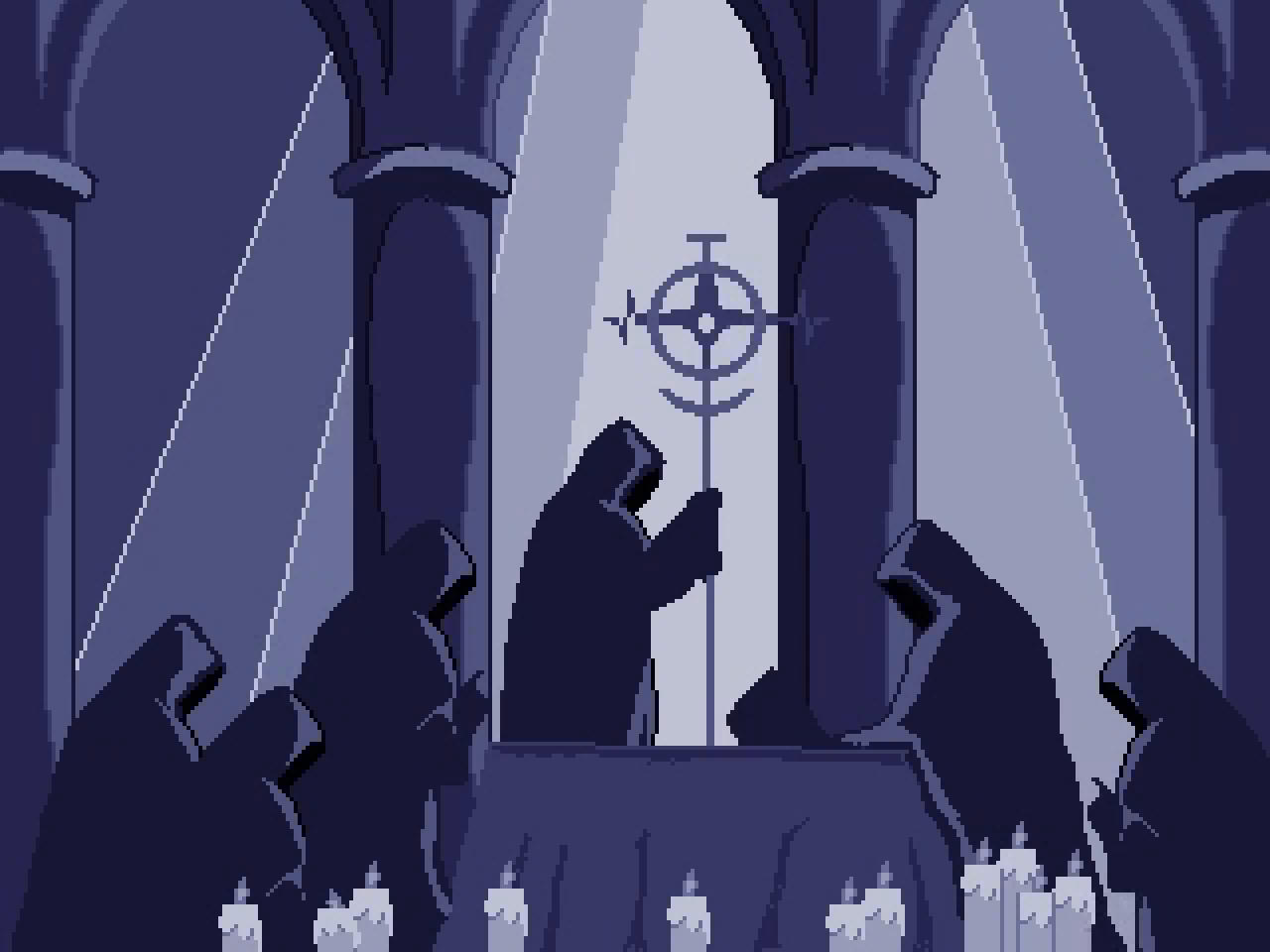
Awaken in a forgotten chamber, with no memory of who you are or how you got there.
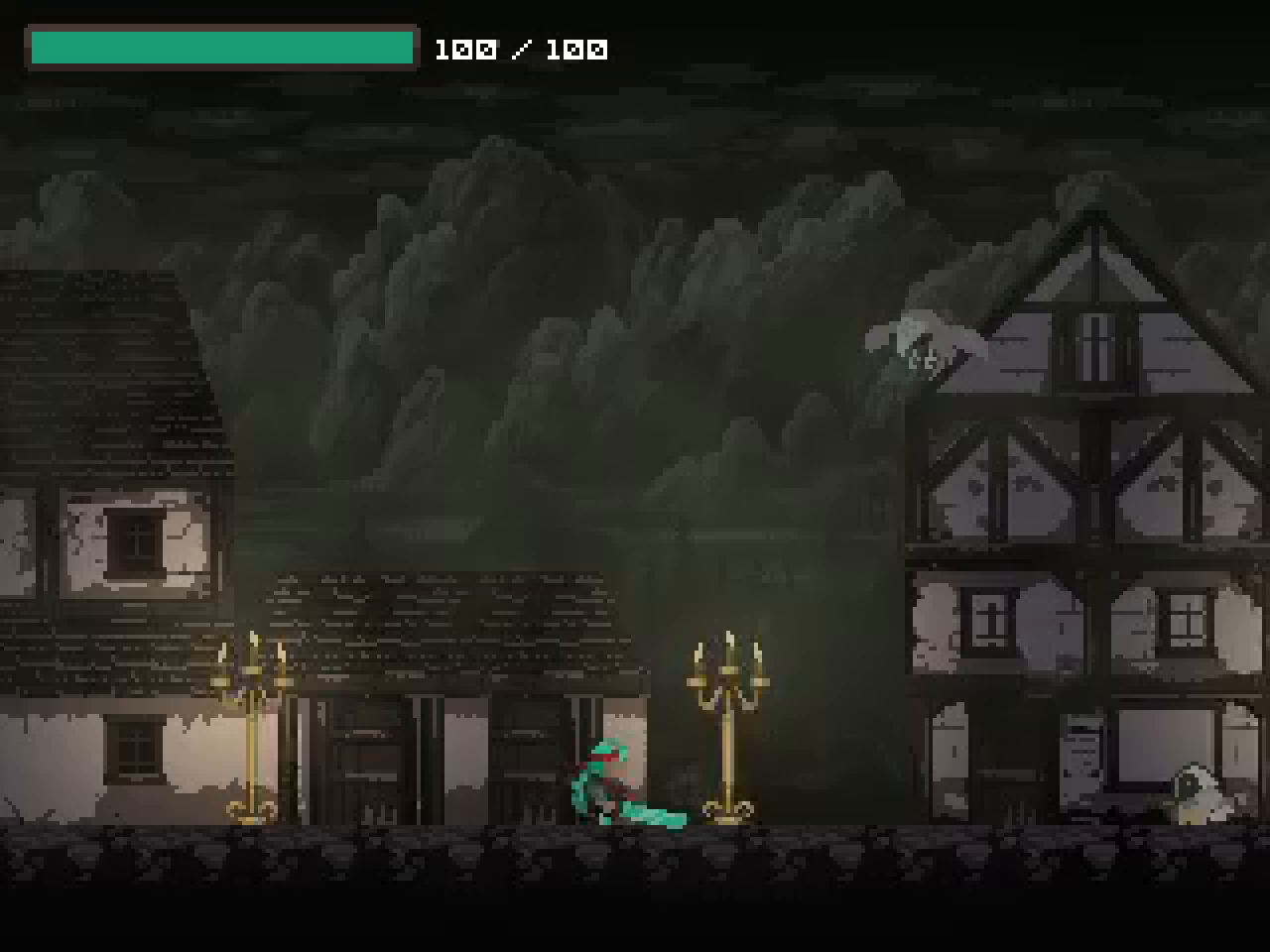
Explore a decaying world filled with abandoned villages, ancient crypts, dangerous creatures and characters who may know more than they are willing to reveal.
The Beat is a 2D pixel-art metroidvania focused on exploration, combat and environmental storytelling.
Discover interconnected locations, face bosses with distinct combat mechanics, collect mysterious objects and uncover fragments of a story in which not everything is as it first appears.
1.5-2 hEstimated playtime
3Interconnected areas
3Boss encounters
First playable demo
This demo includes:
Three interconnected areas to explore.
Three major boss encounters.
NPCs, dialogue, inventory and exploration.
Hidden paths, secrets and collectibles.
A first glimpse into the world and mysteries of The Beat.
Completing the demo also unlocks access to all the abilities implemented so far.
Years in the making
The Beat began as a small spare-time project inspired by old platform games. Years later, roughly six major versions have passed, and it has become something much bigger.
Behind what you see are many hours of programming, redesigning, testing and rebuilding. I've learned along the way, but this has always been a game I've been working to make.
I'm particularly interested in exploration, combat, difficulty, and anything that feels confusing or could be improved. The demo is not yet available for download.
The Beat combines original work with licensed visual and audio resources by independent creators. Their respective licenses and credits are acknowledged in the game. This page does not grant redistribution rights to any third-party assets.
Planned platformsWindows / Linux / macOS
Game languagesEnglish / Español
Engine / ArtUnity / Aseprite
AvailabilityDemo not released
THE DEVELOPMENT, IN MY OWN WORDS
The Story Behind The Beat
Six versions, a world that kept growing, and countless hours trying to turn an idea into a game.
"I started with something small. I just forgot the part about keeping it that way."
01
It started with something small
I grew up playing the kind of platform games that asked you to explore, fail, learn a route and try again. Many years later, I wanted to make something that brought back a little of that feeling. The idea was modest: a character, a few rooms, movement that felt right, and the satisfaction of building it myself.
I was not setting up a studio. This was a project for evenings and the hours left over from everything else. At first the biggest limitation was time; the second was how little free time remained after I'd decided what to do with the first.
02
The sixth version. More or less.
The Beat did not evolve in a straight line. I have changed the protagonist, the backgrounds, the resolution, the way the character moves and quite a few of the systems around it. Some earlier versions represented a considerable amount of work before I chose to rebuild them. The one I'm developing now is approximately the sixth major iteration.
I learned by doing: tutorials, courses, documentation, lots of experiments and plenty of mistakes. I explored approaches based on Unity's physics as well as movement controllers built without them, following material from creators such as Bardent and Sebastian Lague, among other resources and courses. Each approach solved some problems and revealed others.
Getting a tutorial to run was never the same as having a working game. Then came the difficult part: adapting ideas, combining systems, finding the bugs introduced by that combination and rewriting things when the result did not feel right. Much of the code has been written more than once, and there have been countless hours of tests, fixes and decisions behind the current version.
03
A world made of 320 x 240 pixels
Art has never been my strongest skill, so choosing a fixed native resolution of 320 x 240 was both an aesthetic decision and a practical one. It gave the project a scale I could manage and a clear visual framework: a limited palette for each area, distinct silhouettes, and assets that had to fit together on a very small screen.
That does not mean the art appeared on its own. I have spent a great deal of time choosing, adapting and recolouring resources, building environments and trying to make very different pieces look as though they belong to the same world. Some illustrations and elements are my own; many graphics come from independent creators whose work is available under licences I respect.
The same applies to music and sound effects: the game uses resources made by other authors, acknowledged in the in-game credits. The goal has never been to claim every pixel or sound as mine, but to give all these parts a coherent direction within The Beat.
A scene from the introduction to The Beat.
04
Beyond running and jumping
What began with movement and a handful of rooms gradually acquired a map, an inventory, dialogue, secrets, enemies with different behaviours and bosses that needed their own combat rules. Each new system created possibilities, but also another set of things that had to work together.
The story grew in much the same way. I did not want the world to exist only because the protagonist happened to walk through it. I wanted places with a past, characters with their own concerns, and conversations that sometimes raise more questions than they answer. Some of those ideas are already visible in the demo; others belong to the larger game I am still building.
I would rather let players discover the mystery for themselves. The screenshots show ruins, a cemetery, a village and caves, but explaining exactly why this world is fading would defeat the purpose of exploring it.
05
A beginning, not the whole game
The first playable demo brings together three interconnected areas, three major boss encounters, exploration, conversations and the systems developed so far. It is meant to be something people can actually play, not a promise of features that might exist one day.
It is also a chance to find out what happens when somebody else picks up the controller. I already know where the paths lead and what the enemies are about to do. A new player does not. That difference matters more than another week of polishing details I may be the only person to notice.
Finishing the demo unlocks access to the movement abilities implemented so far. The wider game has more places and ideas planned, but I do not want to promise a release schedule I cannot honestly give.
06
Still making it, one evening at a time
The Beat has taken years of effort. Not uninterrupted years, and certainly not years in which everything went smoothly, but a great many hours spent planning, coding, drawing, testing, fixing and thinking about the next step. It remains a personal project, built around the rest of my life.
I have learned a lot along the way, but the goal was never just to learn how to make games. The goal was to make this one. I still enjoy seeing a room, a character or a mechanic finally work after many attempts, and I would like to keep finding out where the project can go.
I do not know when The Beat will be finished, or whether it will become everything I have imagined. For now, getting a playable version into someone else's hands feels like an important step. If you try it, I would love to know where you got lost, what made you curious and what made you want to carry on.
If you would like to know more or share feedback, you can reach me directly.